Why Martial Arts Is the Secret Weapon for a Successful School Year

Hey there, parents! It’s Somnath Sikdar here, owner and operator of Dragon Gym Martial Arts & Fitness in Chester County, PA. As the school bells start ringing again, I know you’re probably knee-deep in back-to-school shopping, schedule juggling, and wondering how to set your kids up for a strong year.

If you’re like many of the families I talk to every day, you’re asking yourself: How can I help my child stay focused, build good habits, and handle the ups and downs of school life? Well, let me share something I’ve seen time and again in our classes—martial arts isn’t just an after-school activity; it’s like giving your kid a hidden edge that makes everything from homework to classroom participation feel more manageable.

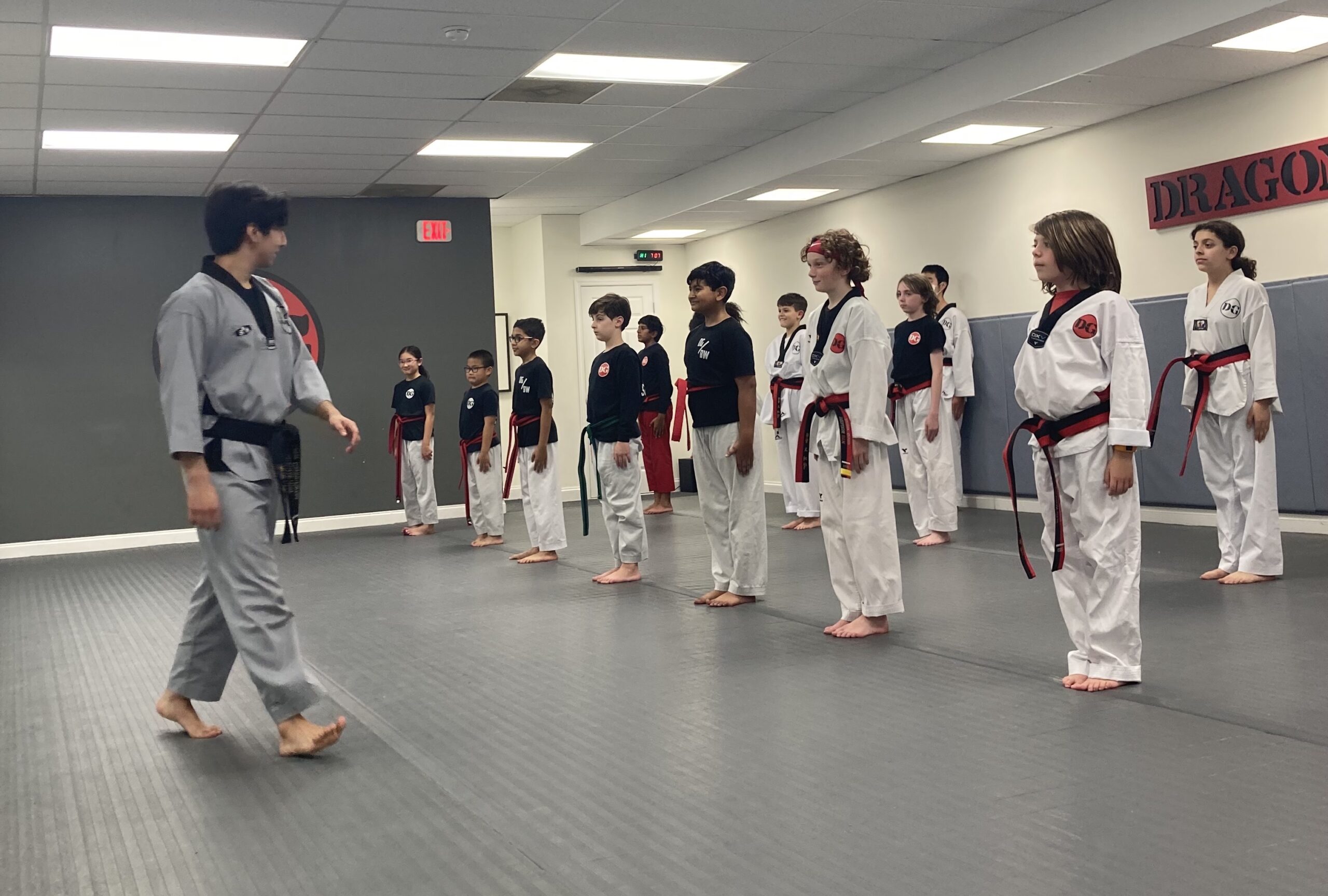
At Dragon Gym, we specialize in teaching martial arts to students aged 5 to 14, with a big focus on those energetic 7- to 12-year-olds who are right in the thick of elementary and middle school challenges.

We offer children’s karate classes and tae kwon do programs that go beyond punches and kicks—they build the kind of inner strength that helps kids excel in all parts of their lives. And yes, we even have options for parents to join in, so you can work on your own health and fitness goals while supporting your child’s growth.

If you’re searching for karate classes near me or karate places near me in areas like Exton, Malvern, Berwyn, or Phoenixville, we’ve got you covered with locations designed to make it easy for Chester County families.

But let’s get real for a second. School can be tough on kids—distractions everywhere, pressure to perform, and that constant battle to stay on task. Have you ever watched your child zone out during homework or fidget in class, wishing there was a way to flip a switch for better focus?

That’s where martial arts comes in as the secret weapon. It’s not about turning your kid into a fighter; it’s about equipping them with tools like discipline and self-control that directly boost their school performance.

Stick with me here, and I’ll break it down, share some stories from our gym, back it up with solid research, and give you actionable steps to see these benefits in your own family.

The Discipline Edge: From the Mat to the Classroom

Think about this: In martial arts, every class starts with structure—lining up, bowing to show respect, and committing to the session ahead. That simple routine teaches kids discipline, the kind that sticks with them long after they leave the gym. For 7- to 12-year-olds, this translates directly to better study habits and classroom behavior.

Instead of procrastinating on assignments or interrupting during lessons, they learn to approach tasks with purpose and patience.

I’ve been practicing and teaching martial arts for years, and one thing that’s always struck me is how these lessons mirror everyday challenges. Take blocking a strike, for example—it’s not just a physical move; it’s a metaphor for shutting out distractions.

When a child practices that in our tae kwon do classes, they’re training their mind to say, “No” to wandering thoughts, just like they’d block an incoming kick. Over time, this builds habits that make homework sessions more productive.

Parents often tell me their kids come home from Dragon Gym classes energized yet calm, ready to tackle reading or math without the usual battles.

And it’s not just my observation—research backs this up. Studies show that martial arts training enhances cognitive functions like attention and memory, which are crucial for school success.

In a study from the Journal of Exercise Science and Fitness, researchers used functional near-infrared spectroscopy to measure brain activity in school-aged children after martial arts interventions.

They found significant improvements in working memory and attention—skills that help kids remember instructions, stay engaged in lessons, and manage multiple tasks like juggling subjects throughout the day. This isn’t fluffy stuff; it’s measurable brain changes that give kids an academic boost.

Self-regulation is another big win here. Kids in this age group are still figuring out how to control impulses, and martial arts provides a safe space to practice. Forms and sparring drills require focus and restraint—wait for the right moment, don’t rush in wildly.

That same mindset helps in school: waiting to raise a hand instead of blurting out, or sticking with a tough problem instead of giving up.

A review in the Journal of Physical Education, Recreation & Dance highlights how martial arts fosters better self-control, leading to improved behavior and even fewer disciplinary issues in class. If your child struggles with sitting still or following through, imagine the difference a few weeks of consistent training could make.

Feeling Like Superheroes: The Fun Side of Martial Arts for School Success

Now, let’s talk about what really lights up those 7- to 12-year-olds—the thrill of feeling like superheroes. At Dragon Gym, when kids learn cool moves like high kicks in tae kwon do or precise strikes in our children’s karate classes, they’re not just having fun; they’re building confidence that carries over to school.

Picture your child walking into class, chest out, ready to conquer a spelling test because they just nailed a new belt test. It’s that superhero vibe that makes the discipline feel exciting, not like a chore.

Have you noticed how kids this age love anything that makes them feel powerful? Martial arts taps into that perfectly. In our Chester County locations, we design classes to be age-appropriate—short, engaging drills that mix play with purpose.

A 9-year-old might start by practicing basic stances, which teach balance and focus, then move to partner exercises that build listening skills. Before you know it, they’re applying that same attention to listening to their teacher or focusing on homework. It’s like upgrading their internal toolkit; suddenly, school doesn’t feel so overwhelming.

One of my favorite parts of running Dragon Gym is seeing parents’ faces when they realize this isn’t just exercise—it’s a game-changer for school.

Take the cognitive benefits: That same Journal of Exercise Science and Fitness study showed how martial arts boosts executive functions, like planning and problem-solving. For a 7-year-old, that might mean organizing their backpack without reminders; for a 12-year-old, it could be strategizing how to study for exams. And the self-regulation?

Research from Frontiers in Pediatrics on at-risk youths found that extended martial arts programs improved psychological functions, including better emotional control and reduced anxiety—key for handling school stress.

These aren’t isolated findings; they’re consistent across studies, showing how martial arts wires kids’ brains for success.

Real Stories from Dragon Gym: Proof in the Progress

Let me share a couple of success stories straight from our gym—these are the moments that keep me passionate about what we do. First, there’s Alex, a 10-year-old from our Exton location. When he started our children’s karate classes, his parents were worried about his slipping grades and constant distractions in class.

Alex loved video games but struggled to sit through homework. After a few months of consistent training, something clicked. The discipline from practicing forms helped him develop routines at home—like setting a timer for study breaks, just like we do in class for drills.

His mom shared with me, “Master Sikdar, it’s like he’s a different kid. He used to fight us on everything, but now he approaches schoolwork with that same focus he has on the mat.” Alex’s report card showed it too—grades up in math and reading, and his teacher noted better classroom behavior.

We tied this back to the cognitive benefits; that self-regulation from martial arts made him more resilient to frustrations. If you’re in Exton and looking for karate classes near me, check out our Martial Arts and Fitness in Exton, PA spot—it’s where stories like Alex’s happen every day.

Then there’s Mia, an 8-year-old from our Malvern classes. She was shy, often overwhelmed by tough tests, and her focus would wander during schoolwork. In our tae kwon do program, she learned cool moves like spinning kicks, which made her feel like a superhero.

But the real magic was in the mental side—repeating sequences built her concentration. A few weeks in, she aced a challenging science test she’d been dreading. Her dad told me, “She came home beaming, saying the focus drills helped her block out nerves, just like blocking in class.”

This ties right into the research from the Journal of Exercise Science and Fitness, where martial arts was shown to enhance attention and working memory in kids her age.

Mia’s story is common in our Kids Martial Arts in Malvern, PA program—kids leave feeling empowered, and that confidence spills into school. These aren’t one-offs; I’ve seen dozens of similar turnarounds in Berwyn and Phoenixville too.

Practical Steps: How to Make Martial Arts Work for Your Child’s School Year

Alright, let’s get practical—because knowledge without action is like a punch without follow-through. If you’re ready to give your 7- to 12-year-old this secret weapon, here’s a step-by-step guide based on what works best at Dragon Gym:

  1. Start with a Trial Course: Don’t commit blind—bring your child to some intro classes. In Chester County, our children’s karate classes let kids try moves and feel the energy. This helps them (and you) see if it’s a fit. Ask yourself: Does my child light up when learning something new? That’s a sign martial arts could boost their school focus.
  2. Set Clear Goals Together: Once enrolled, talk with your kid about what they want—better grades? More confidence? We do this in class, setting belt goals that parallel school achievements. Research shows goal-setting in martial arts improves self-regulation, so apply it at home: “Let’s practice focus for 10 minutes on homework, like you do in tae kwon do.”
  3. Incorporate Daily Routines: Use martial arts principles daily. For study habits, try a “warm-up” ritual—deep breaths before homework, mimicking class starts. This builds discipline for classroom behavior. Parents in our Berwyn location swear by this; check out Martial Arts and Fitness in Berwyn, PA for classes that emphasize these habits.
  4. Track Progress and Celebrate Wins: Keep a simple log of improvements—better test scores, fewer teacher notes. Tie it back to training: “Remember how you stuck with that tough drill? That’s why you nailed the quiz.” Studies like the Frontiers one highlight how consistent practice leads to lasting cognitive gains.
  5. Involve the Whole Family: Why stop at kids? Join our adult classes to model the behavior. In Phoenixville, our Martial Arts Classes in Phoenixville, PA – Tae Kwon Do & Brazilian Jiu-Jitsu offer family sessions that strengthen bonds while everyone builds discipline.

These steps aren’t complicated, but they work because they’re rooted in martial arts fundamentals. I’ve used them myself as a parent and coach, and the results? Kids who handle school with ease and parents who feel more connected.

Beyond School: The Bigger Picture for Health and Happiness

While we’re focusing on school, martial arts at Dragon Gym touches every aspect of life. For kids, it promotes physical health—stronger bodies mean fewer sick days and more energy for learning.

Mentally, it reduces stress; that Frontiers study also noted lower anxiety in participants. And for parents? Joining in helps you hit fitness goals, manage stress, and even apply discipline to your career or home life.

I remember early in my teaching days, a parent asked, “Master Sikdar, how does this help me?”

Simple: When you train alongside your child, you’re showing them commitment. It’s a win-win—your family gets healthier, happier, and more successful together.

Wrapping It Up: Ready to Unlock Your Child’s Potential?

So, parents, what if this school year could be different—easier, more successful, with your child feeling like a superhero every step of the way? Martial arts at Dragon Gym is that secret weapon, building discipline for better habits, boosting cognitive skills backed by research, and creating stories of real progress.

If you’re in Chester County and searching for karate places near me or children’s karate classes, start today. Visit our Children’s Martial Arts Classes in Chester County, PA page to learn more and sign up for a trial. Whether it’s Exton, Malvern, Berwyn, or Phoenixville, we’re here to help your family succeed.

What’s holding you back? Drop a comment below with your biggest school worry, or better yet, schedule that first class. Let’s make this year one for the books—full of focus, fun, and triumphs on and off the mat.

See you at Dragon Gym!

What are the physical benefits of Tae Kwon Do?

Tae Kwon Do offers a variety of physical benefits, including:

  • Improved Cardiovascular Health: The high-energy movements, kicks, and sparring sessions contribute to better heart health by increasing heart rate and improving circulation.
  • Enhanced Flexibility: Tae Kwon Do involves numerous stretching exercises which significantly improve flexibility. This helps in reducing the risk of injuries, improving posture, and increasing range of motion in joints.
  • Increased Strength: Practicing Tae Kwon Do involves using body weight and resistance for various kicks, punches, and blocks, which builds muscle strength, particularly in the legs, core, and upper body.
  • Better Coordination and Balance: The discipline requires precise coordination between mind and body for executing techniques, which in turn enhances balance, especially through stances and forms (poomsae).
  • Weight Management: The rigorous workout helps in burning calories, aiding in weight loss or maintenance, thus supporting overall body composition.
  • Muscle Endurance: The repetitive nature of training, like kicking drills or holding poses, increases muscle endurance over time.
  • Bone Density: The impact from techniques like kicking and jumping can contribute to stronger bones, reducing the risk of conditions like osteoporosis over time.
  • Reaction Time and Reflexes: The fast-paced nature of sparring and drills sharpens reflexes and improves reaction times, which can be beneficial in everyday life scenarios.
  • Stress Relief: Physical activity is known to reduce stress, and the focus required in Tae Kwon Do can also help in managing stress levels through disciplined practice.
  • Injury Prevention: Learning proper techniques and body mechanics can prevent injuries not only in martial arts but in other physical activities or daily life.
  • Core Stability: Many movements in Tae Kwon Do originate from or are supported by the core, leading to improved core strength and stability.

These benefits make Tae Kwon Do not just a martial art but also an effective form of physical fitness that can be adapted to different ages and fitness levels. Remember, consistency in practice is key to realizing these benefits.

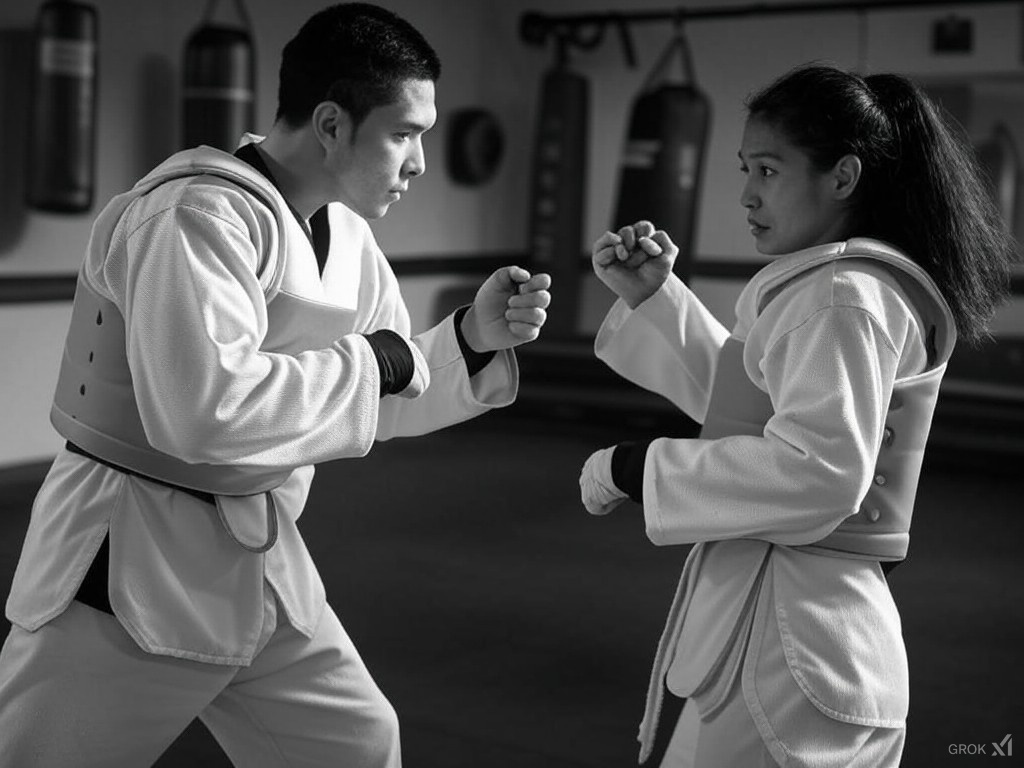
The physical benefits of Taekwondo.  Two Taekwondo Students Sparring

5 Unique Birthday Party Ideas for Active Kids

As parents, we all want our kids to have a fun and memorable birthday celebration each year. But why settle for the same old party routine when you can get creative and plan an active, energy-filled bash? After all, keeping kids moving not only promotes physical health but also boosts cognitive development, emotional well-being, and social skills.

So ditch the been-there-done-that pizza and video game parties – it’s time to think outside the box! I’m here to share five unique birthday party themes that will have your little ones (and their friends) burning calories while making cherished memories. Trust me, as a martial arts instructor, I’ve witnessed firsthand how activities that get kids’ bodies engaged can be an absolute blast.

Are you ready to kick your child’s birthday party-planning into high gear? Let’s dive in!

  1. Martial Arts Mania – Karate Birthday Parties

What better way to channel your child’s boundless energy than with a martial arts-themed extravaganza? This action-packed party is sure to be a knockout! Imagine your backyard or community center transformed into a mini dojo, complete with martial arts mats and equipment.

Start the festivities with a warm-up led by yours truly or another certified instructor. We’ll guide the little fighters through dynamic stretches and fun cardio exercises to get their hearts pumping. Once they’re all loosened up, it’s time to dive into the martial arts techniques! Depending on their skill level, we can teach basic blocks, strikes, and kicks from various disciplines like karate, tae kwon do, or kung fu.

But the fun doesn’t stop there! Incorporate exciting games and challenges that test their newly acquired skills. Set up a secure “break-a-board” station where kids can experience the thrill of shattering a wooden plank with a powerful strike (under close supervision, of course). Or arrange an obstacle course that requires them to crawl under barriers, jump over hurdles, and demonstrate their agility and coordination.

To fuel their high-octane celebration, serve up healthy snacks like fruit skewers and veggie sushi rolls, along with refreshing drinks like coconut water or fruity infused waters. And what’s a martial arts party without some epic party favors? Gift each guest their own beginner’s training gear, like hand wraps, focus mitts, or even a mini bokken (wooden sword)!

  1. Backyard Gymnastics Jamboree

For the little tumblers and acrobats in your life, a gymnastics-themed party is a surefire way to keep the action going. With some basic safety precautions and the right equipment, your backyard can become a miniature Olympic arena!

Start by setting up a tumbling strip with thick, cushy mats for the kids to practice their rolls, handstands, and cartwheels. If you have access to a beam or balance bar, even better! Let them strut their stuff and work on their poise. You can also create stations for strength-building exercises like push-ups, sit-ups, and planks – make it a fun challenge by turning it into a timed circuit.

Rent or borrow a mini trampoline and let the high-flying festivities begin! Under careful adult supervision, the kids can take turns bouncing, performing tricks, and releasing all that pent-up energy in a safe, controlled environment.

For an extra dose of excitement, consider hiring a professional gymnastics instructor or coach to lead the party and teach the kids some cool new skills. They’ll be amazed as they learn how to execute proper handsprings, walkovers, and maybe even aerials!

When it’s time for refreshments, create a “gymnastics fuel” station with protein-packed snacks like trail mix, granola bars, and yogurt parfaits to keep their energy up. And for party favors, gift each guest a cool drawstring backpack filled with essentials like a water bottle, grip resistance bands, and mini protein bars.

  1. Ninja Warrior Adventure

Does your child have a flair for the dramatic and love to conquer physical challenges? Then a Ninja Warrior-style party is right up their alley! Inspired by the wildly popular obstacle course competitions, this party will put their agility, strength, and problem-solving skills to the ultimate test.

First things first, you’ll need to construct an epic obstacle course in your backyard or a local park. Get creative with affordable materials like plywood, PVC pipes, and sturdy cardboard boxes. Incorporate challenges like a climbing wall, a suspended cargo net to crawl under, a series of balance beams to traverse, and even a mud pit or slip-and-slide section for some wet and wild fun!

To kick off the festivities, have the kids dress up in their best ninja gear – whether it’s an authentic outfit or a simple black shirt and headband. Then, divide them into teams and let the Ninja Warrior games begin! Time each team as they navigate the obstacle course, cheering each other on and celebrating every successful completion.

For an added thrill, set up a dunk tank or bucket brigade challenge where they can soak their friends or family members who volunteer to be targets. It’s all in good fun, and it’ll keep them cool on a hot summer day!

Refuel the little ninjas with protein-packed bites like hardboiled eggs, edamame, and beef jerky, along with hydrating beverages like coconut water and electrolyte-replenishing sports drinks. And for party favors? Ninja-themed sunglasses, sweatbands, and water bottles are sure to be a hit!

  1. Wacky Backyard Olympics

If your kid is always eager to participate in friendly competition, why not host your very own Backyard Olympics? This party theme lets you get as creative and silly as you’d like while encouraging physical activity, teamwork, and good-natured rivalry.

Start by dividing the kids into teams and having them come up with fun team names and silly chants or cheers. Then, it’s time to tackle a series of zany “athletic” events that put their skills and problem-solving abilities to the test.

For example, you could have a three-legged race where pairs of kids have to coordinate their movements while attached at the ankle. Or set up a wacky water balloon toss that gets increasingly challenging as the distance grows. How about a classic egg-and-spoon race, but with a twist – like having to navigate an obstacle course or hop on one foot?

Get their creative juices flowing with a “sport stacking” competition using cups or lightweight buckets. See who can build and break down the most intricate cup pyramid the fastest. Or challenge their accuracy and hand-eye coordination with a classic water gun or Nerf blaster target range.

When it’s time for snacks, embrace the Olympic theme with a “Carb-Loading Station” featuring healthy treats like whole-grain pretzels, granola bars, and fresh fruit skewers. And don’t forget to award each participant with a shiny (and edible) gold medal made from chocolate coins or festive wrap!

  1. Glow-in-the-Dark Dance Party

For the kids who can’t sit still and love to boogie down, a glow-in-the-dark dance party is an electrifying way to celebrate! This high-energy theme guarantees non-stop movement from start to finish, not to mention plenty of laughter and memories.

To set the stage, you’ll need to transform your party space into a brilliant, neon-lit wonderland. Black lights, glow sticks, and colorful rope lights can work wonders in creating a vibrant, high-energy atmosphere. Encourage guests to come dressed in their brightest, most fluorescent outfits for an extra pop of fun.

Once the party is in full swing, crank up the tunes and let the dance floor take center stage! Make sure to include a mix of upbeat, kid-friendly songs that’ll have them jumping, twisting, and shaking their sillies out. For an added blast, incorporate classic dance games like Musical Chairs, the Freeze Dance, and the Limbo to really get them moving.

To keep their energy levels soaring, set up a “Retro Soda Shoppe” with fizzy, fruity concoctions they can sip through colorful, bendy straws. Classic treats like glow stick necklaces, bracelets, and rings also make for perfect party favors they’ll cherish long after the last dance.

Need an extra burst of excitement? Consider renting a dance game system or setting up a mini disco ball to really amp up the party vibes!

No matter which theme you choose, the key is to prioritize fun, meaningful movement that gets those little bodies active. After all, kids thrive on physical play – it’s how they explore the world, build confidence, and forge bonds with their peers.

So don’t settle for the same old birthday routine this year. Get creative, get moving, and make magical memories that’ll last a lifetime! Your child (and their bouncy buddies) will be thanking you for breaking the mold and throwing an epic, one-of-a-kind celebration.

Now, who’s ready to party?

How Muay Thai Kickboxing Prepares You for the New Year

As the New Year approaches, bringing with it the promise of new beginnings and fresh challenges, it’s the perfect time to discuss a transformative journey through Muay Thai kickboxing. If you’re in Chester County, PA, searching for “kickboxing near me” or looking for “Malvern, PA kickboxing classes” or “Downingtown, PA kickboxing classes”, you’re not just discovering a fitness routine; you’re embarking on a path of profound personal growth.

Muay Thai Kickboxing: A Catalyst for Adaptability

Adaptability is not just a skill; it’s a necessity in our ever-changing world. Training in Muay Thai kickboxing is more than learning to punch or kick; it’s about developing a mindset that embraces change. Each class is a microcosm of life’s unpredictability. One moment you’re defending, the next, you’re on the offensive. This constant shift mirrors the ebb and flow of life, teaching us to be flexible and responsive to change.

A Journey Beyond Physical Fitness

Sure, kickboxing is an excellent way to lose weight. The high-intensity nature of the training ensures a robust cardiovascular workout, burning calories and shedding pounds. But have you ever considered the mental weight loss? The shedding of stress, anxiety, and self-doubt? That’s the real magic of Muay Thai.

Consistency is Key: How Often Should You Train?

Is 2 days a week enough for kickboxing? Is training 3 times a week enough? The answer lies in your personal goals. For beginners, twice a week can be a great start to build stamina and learn the basics. Gradually, as your body adapts, you might find yourself craving more. Three times a week can offer a more immersive experience, enhancing your skills and fostering mental resilience.

Age is Just a Number

And if you’re wondering, “Is 40 too old to start kickboxing?” let me assure you, it’s never too late to start. Age is but a number in the dojo. It’s your spirit, determination, and willingness to learn that truly count.

The New Year: A Metaphor for Life’s Journey

As we step into the New Year, let’s carry the lessons learned in the kickboxing classes. Each punch and kick symbolizes our fight against complacency, our relentless pursuit of personal betterment. The agility and quick thinking fostered in Muay Thai prepare us for life’s sudden turns.

In conclusion, whether you’re seeking “Malvern, PA kickboxing classes“, “Downingtown, PA kickboxing classes”, or just looking to embrace a new challenge in the New Year, Muay Thai kickboxing offers a path to not just physical fitness, but a mindset primed for success. So, are you ready to embrace change and kickstart your journey?

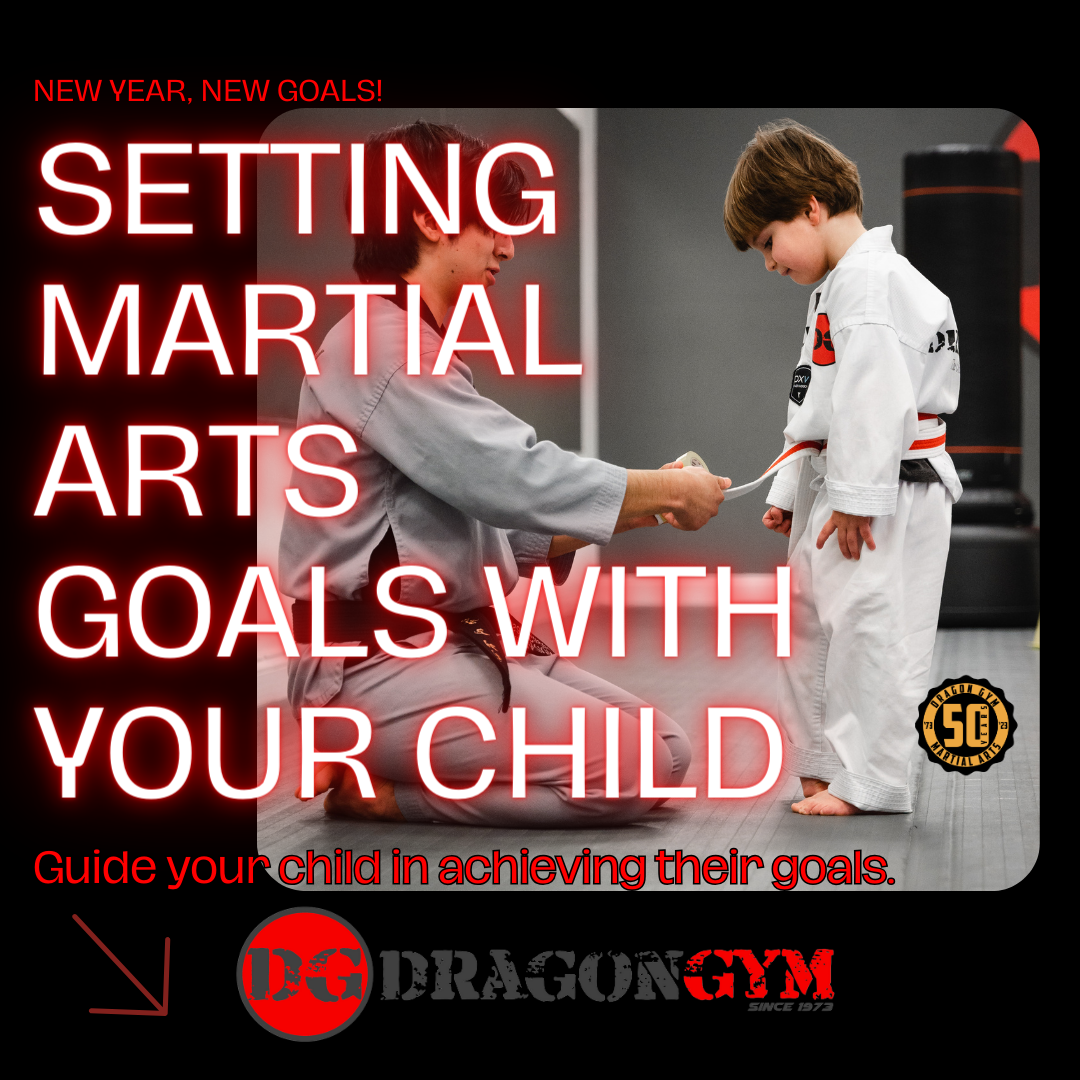
Setting Martial Arts Goals with Your Child for the New Year

As we enter a new year full of possibility and promise, it can be an optimal time for reflection and planning. If your child is currently partaking or interested in embarking on a martial arts journey, goal-setting becomes integral for progress, development, and success.

Through my own experiences, I’ve witnessed the power goals can harness when tempered with patience and determination. Thus, in this post, I aim to discuss the merits of goal-setting in martial arts training for kids and provide parents and children with constructive tips to create achievable, purposeful goals to kickstart the year.

Why Set Goals in Martial Arts?

Similar to other areas in life, goals in martial arts provide direction. They outline a destination to motivate children to persevere when challenges arise. More so, goals boost accountability between parent, child and instructor – ensuing all parties are aligned in their efforts.

After training across various disciplines like Taekwondo, Karate, Judo, and Jiu-Jitsu, I’ve learned that goals should extend beyond merely attaining the next belt rank. Of course, achieving milestones provides children encouragement through visible results. However, goals centered upon technique refinement, skill development, tournament participation etc. also prove meaningful.

Start by Asking Purposeful Questions

Prior to co-creating goals, inquire from your child about their aspirations in martial arts through open-ended questions. Gain insight into their reasons for joining and what excites them ahead. As their parent, share your hopes too. Alignment of purpose fuels motivation.

Probe about fears or weaknesses they aim to conquer next year. I recall consistently struggling with my kicking height as a young Tae Kwon Do student. My goal to finally execute a head-level kick remained locked for months before coming to fruition. That single goal taught me patience and hard work trump all else.

Set SMART Goals

With the purpose established, introduce your child to S.M.A.R.T goals. In my opinion, the SMART acronym represents the hallmarks of quality goals tailored to a child’s needs and level. Well-defined goals provide a roadmap children can navigate alongside consistent parental encouragement.

Specific – Precisely outline what must be achieved. Quantify and qualify each goal.

Measurable – Include metrics to tangibly track progress. Measure against personal milestones rather than peers.

Achievable – Ensure appropriateness for the child’s age and skill level based on their current baseline. Discuss with the instructor if needed. Small wins maintain vigor.

Relevant – Goals must organically tie back to your child’s larger purpose for pursuing martial arts. This fuels sustained effort.

Time-Bound – Affix target timeframes to accomplish each goal, culminating yearly. Avoid open-ended efforts lacking deadlines.

Common Child Martial Arts Goals

While personalized goals work best, the list below shares common examples I’ve observed from children across most disciplines:

  • Consistently attend classes 2x per week
  • Improve flexibility by mastering front and side splits
  • Perfect 5 different kicks up to head-level
  • Learn 5 new forms for the next belt grading
  • Increase stamina to endure 60-minute intense sparring sessions
  • Overcome fear of combat through weekly 30-minute controlled sparring
  • Enroll and participate in one local tournament

In my Taekwondo classes, I ensure students set a sparring participation goal to apply skills in simulated competition. The exhilaration of executing under pressure and spectator cheering cannot be replicated during regular sessions. Win or lose, immense growth follows.

Make Goal-Setting Interactive

Print a yearly calendar to visually map milestones over 12 months. Children gain immense satisfaction with color-coding achieved goals per quarter or month. Maintain an ongoing journal to log challenges faced, solutions implemented, breakthroughs witnessed, etc.

Re-evaluate progress mid-year. Course-correct goals become unfeasible while celebrating small wins to uplift morale for bigger battles ahead.

Share Goals with the Instructor

To enable specific feedback and coaching, inform instructors regarding individual goals early. Their deeper insights into a child’s strengths, weaknesses, and optimal next progression points become invaluable.

During regular reviews, they can provide tactical recommendations to overcome roadblocks.

For instance, upon noticing Zoey’s awkward hip rotation while perfecting her tornado kick, I suggested specific warm-up drills before class to enhance flexibility and kicking height. Her parent-teacher alignment facilitated achievement.

The Merits Outweigh All

Though extensive planning underlies effective goals, know that deviance from set plans occurs occasionally. Illnesses, injuries, waning motivation, etc. remain out of our control. I’ve witnessed children ready to quit when confronted with radical change and uncertainty.

Hence, emphasize the merits goal-achievement brings – enhanced self-esteem, self-confidence, camaraderie, and lifelong skills transferable outside the Dojang. Inspire them to view setbacks as feedback propelling them one step closer to dreams conceived together.

10 Powerful Life Lessons Gained from Tae Kwon Do Training

In the world of martial arts, Tae Kwon Do holds a unique place with its emphasis on high kicks and swift movements. But beyond the physical prowess it develops, Tae Kwon Do provides a rich platform for personal growth. This ancient Korean martial art imparts critical life skills, fostering character building and personal development. This blog post delves into the top ten life lessons you can learn from Tae Kwon Do training, highlighting how this discipline extends far beyond the dojang.

  1. Discipline and Respect: Tae Kwon Do teaches the importance of discipline in achieving goals and fosters a deep sense of respect for others, the environment, and oneself.
  2. Patience: Martial arts training isn’t quick or easy. It requires persistence and patience to learn, practice, and perfect techniques, fostering an understanding that real growth comes over time.
  3. Self-Confidence: Through mastery of techniques and advancement through the belt system, students gain a strong sense of self-confidence. This can extend to all aspects of their lives.
  4. Perseverance: Tae Kwon Do instills a spirit of perseverance, teaching students to never give up, even when faced with challenging situations or setbacks.
  5. Mindfulness: The focus required in Tae Kwon Do encourages mindfulness, the practice of being present and fully engaged in the current moment. This skill can help in daily life, reducing stress and increasing focus.
  6. Physical Fitness: Tae Kwon Do is an excellent form of exercise that enhances physical fitness. It promotes strength, flexibility, and coordination, imparting a lifelong appreciation for physical health.
  7. Self-Defense: While Tae Kwon Do is not solely about fighting, it does teach valuable self-defense skills. These skills can provide a sense of security and empowerment.
  8. Teamwork: Even though it might seem like a solitary sport, Tae Kwon Do fosters a sense of community and encourages students to help each other progress, teaching the value of teamwork.
  9. Goal Setting: The belt ranking system in Tae Kwon Do helps students learn the importance of setting and working towards goals, a skill that can translate into personal and professional success.
  10. Resilience: Tae Kwon Do training often involves falling and getting back up, both literally and figuratively. This teaches students resilience, helping them to bounce back from challenges in life.

Tae Kwon Do is more than just a martial art; it’s a framework for lifelong learning and personal development. The lessons learned in the dojang – discipline, respect, patience, self-confidence, perseverance, mindfulness, physical fitness, self-defense, teamwork, goal setting, and resilience – are transferrable to all aspects of life. While the journey in Tae Kwon Do may begin with a desire to learn a martial art or improve physical fitness, it often ends up being a journey of personal growth and self-discovery. And the best part? It’s a journey that continues to enrich, long after you’ve left the training floor.

Developing Self-Defense Skills in Children with Martial Arts

As a parent, the safety and well-being of your child are of paramount importance. In today’s ever-changing world, it has become essential to equip our children with the necessary skills that help them stand tall in any situation. One such essential skill set is self-defense, and martial arts is an exceptional way to imbibe these skills in your child’s upbringing.

Why the Need for Martial Arts?

Although many activities help children grow and learn, martial arts offer unique benefits that other pursuits may not provide. Team sports are fantastic for teaching kids about teamwork and leadership, and solitary activities such as reading and drawing help children develop creativity and a keen sense of concentration. However, none of these activities holistically encapsulate the aspects of physical fitness, mental resilience, discipline, respect, and self-defense skills that martial arts do.

Martial arts training is not just about learning combat techniques but also about developing self-confidence, improving physical coordination, and fostering discipline. With martial arts, children learn to respect others and themselves, fostering a sense of responsibility and self-reliance.

The Long-term Benefits of Martial Arts

The benefits of martial arts go far beyond simply learning self-defense techniques. Martial arts teach children about discipline and the value of hard work, contributing significantly to their character development. The practice also builds their self-esteem, as it gives them a sense of achievement when they learn a new technique or earn a new belt.

Furthermore, martial arts are a fantastic way to improve a child’s physical fitness. They incorporate aerobic and anaerobic exercises, strength training, and flexibility, promoting overall physical health. This physical conditioning helps to reduce the risk of obesity, heart disease, and diabetes later in life.

Most importantly, martial arts teach children how to handle conflict and stress, fostering emotional and mental resilience. They learn to maintain calm and composure in challenging situations, a skill that will serve them well throughout their lives, whether in personal relationships, school, or later in the workplace.

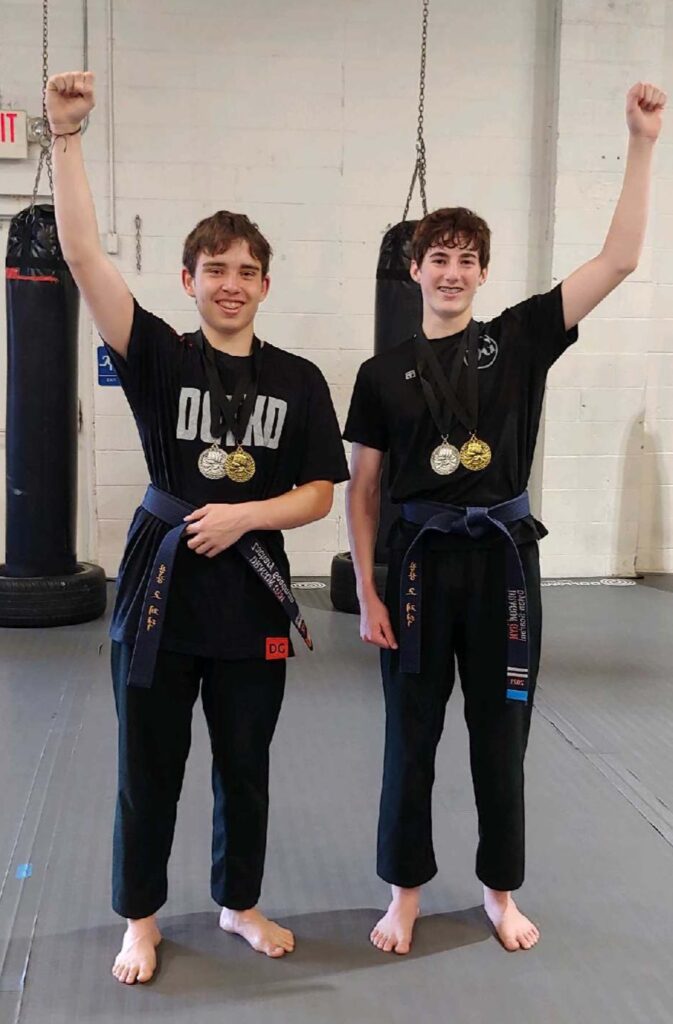
Downingtown Taekwondo Students show off their medals after a sparring tournament

Addressing Parental Concerns

It is natural for parents to have concerns about their children participating in martial arts. There is a common misconception that martial arts encourage violence, but this could not be further from the truth. Martial arts is rooted in respect, discipline, and self-control. It teaches children when and how to use these skills and underscores that they should only be used as a last resort for self-defense.

The safety of the child during training is also a top priority in martial arts schools. The techniques are taught under the careful supervision of trained professionals, ensuring a safe and nurturing environment for children to learn.

Moreover, the notion that martial arts are strictly competitive and focus only on winning is incorrect. Yes, there are competitions, but they are a part of the journey, not the end goal. The real win in martial arts is in the personal growth and development a child experiences through training.

So, as a parent, don’t let misconceptions hold you back. Enroll your child in a martial arts program and let them grow into a confident, disciplined, and healthy individual. Rest assured, the skills and values your child will learn from martial arts will guide them successfully in every walk of life. Martial arts aren’t just about fighting; it’s about equipping your child for life’s many battles.

Teaching Respect and Developing Courtesy through Martial Arts

Why Teaching Respect and Developing Courtesy through Martial Arts Could Save Your Child’s Life

As adults, we have a responsibility to teach our children respect and courtesy. In a world where technology reigns supreme and social media dominates our lives, it can be challenging to engage with our children and help them connect with the world around them. Martial arts is a proven method of teaching respect, focus, and discipline in children while also promoting physical fitness and strength.

Why Martial Arts?

Martial arts promote respect, discipline, and courtesy through a series of techniques and routines. It teaches children to respect themselves, their instructors, and their teammates. They learn to follow instructions and stay focused, even when things may get difficult or boring. Martial arts instill a sense of discipline that builds character and sets them up for success in other aspects of their life.

Building Respect and Courtesy through Martial Arts

Martial arts is rooted in the mutual respect between the teacher and student. Respect is emphasized from the very first day of class, and it is ingrained in every part of the martial art world. Children are taught to bow when entering and leaving the dojo and to show respect to their instructor and their teammates. They are expected to listen attentively and respond with ” Yes, Sir/Ma’am” when spoken to. This focus on respect helps children develop communication skills and understand the importance of listening to others.

Learning Discipline and Focus through Martial Arts

Discipline and focus are essential skills that serve children throughout their lives. Martial arts help teach children how to stay focused and disciplined, even when things may get challenging or frustrating. The practice of martial arts requires children to learn a series of skills and techniques step-by-step. Children learn the importance of hard work and practice, and how it yields results.

The Power of Repetition in Martial Arts Training

Repetition is a key component in martial arts training. Martial arts classes repeat the same drills over and over again until it becomes second nature. This aspect of martial arts training teaches children the importance of repetition and practice to achieve their goals. It also helps improve their coordination and muscle strength as they develop their skills.

Take Action!

Do you want your child to develop the essential skills of respect and courtesy? Enrolling your child in martial arts classes is the key to unlocking their full potential. Don’t wait any longer, sign them up for lessons today!

Conclusion

In conclusion, teaching respect and developing courtesy through martial arts is essential for the growth and development of children. It is an excellent way to teach discipline, focus, and respect while also providing a fun physical activity for children.

The repetition and practice required in martial arts help children develop an inherent work ethic and discipline that serves them throughout their lives. By enrolling your child in martial arts classes, you are laying the foundation for a strong and successful future.

Boost Your Child’s Social Skills with Kids Martial Arts Classes in Downingtown, PA

Martial arts classes are not just about physical fitness or self-defense. They can also play an important role in improving your child’s social skills.

In Downingtown, PA, there are many options for Kids Martial Arts Classes that can provide a supportive and structured environment that encourages social interaction and communication.

Here are a few ways in which martial arts can boost your child’s social skills.

  1. Teamwork: Martial arts classes provide an opportunity for children to work together in pairs or groups. They learn to communicate, collaborate and support their partners, developing teamwork and leadership skills that are important for building positive relationships with others.
  2. Respect: Respect is a fundamental value taught in martial arts classes. Children learn to respect their instructors, peers, and opponents, as well as themselves and their abilities. This helps build positive relationships based on mutual respect and understanding.
  3. Confidence: Martial arts training helps build confidence and self-esteem. As children learn new skills and techniques, they develop a sense of pride in their abilities. This confidence translates into better social skills, as children feel more comfortable interacting with others and expressing themselves.
  4. Communication: Effective communication is essential for building positive relationships. Martial arts classes provide an opportunity for children to practice communication skills, such as listening and speaking clearly, leading to stronger social skills that will serve them well in all areas of life.
  5. Empathy: Martial arts training encourages children to develop empathy and understanding for others. Through partner drills and sparring, children learn to respect their opponent’s abilities and boundaries. This helps them develop compassion and empathy, which are essential for building positive relationships with others.
  6. Positive Reinforcement: Martial arts classes provide an environment that encourages positive reinforcement. Instructors often use praise and positive feedback to motivate students, which helps build self-esteem and confidence. This positive reinforcement also encourages children to be supportive and encouraging towards their peers, which helps build positive relationships.
  7. Conflict Resolution: Martial arts training teaches children how to identify and manage conflicts in a constructive way. This helps children develop problem-solving skills and promotes positive relationships based on effective conflict resolution.

In conclusion, if you are looking for a way to boost your child’s social skills in Downingtown, PA, consider enrolling them in Kids Martial Arts Classes.

Through teamwork, respect, confidence, communication, empathy, positive reinforcement, and conflict resolution, martial arts classes can help children build positive relationships that will serve them well throughout their lives.

Be sure to do your research and find a reputable instructor experienced in teaching children.

Explore Self-Defense with Tae Kwon Do: Benefits, Techniques & Classes near Downingtown, Chester County

Are you looking for a fun and practical way to stay fit while learning valuable self-defense techniques? Look no further than Tae Kwon Do! This Korean martial art is not only a great form of exercise but also a way to develop the mindset and skills needed to protect yourself in real-life situations. In this blog post, we’ll explore the benefits of exploring self-defense with Tae Kwon Do and why Downingtown Tae Kwon Do may be the perfect place for you to start your journey.

Developing a Self-Defense Mindset

One of the biggest benefits of practicing Tae Kwon Do is developing a self-defense mindset. This means learning how to stay aware of your surroundings and potential threats, as well as having the confidence and ability to protect yourself if necessary. Tae Kwon Do classes often include drills and scenarios that simulate real-life situations, allowing you to practice and hone your skills in a safe and controlled environment.

Learning Self-Defense Techniques

In addition to developing a self-defense mindset, Tae Kwon Do also teaches a variety of techniques that can be used in self-defense situations. These techniques include strikes, kicks, blocks, and grappling moves, all of which are designed to quickly and efficiently neutralize an attacker. By practicing these techniques in class, you’ll not only improve your physical abilities but also develop the muscle memory needed to react quickly and effectively in a real-life situation.

Practical Applications

Of course, the ultimate goal of learning self-defense is to be able to apply these techniques in practical situations. Tae Kwon Do is particularly effective in self-defense situations because it emphasizes powerful and precise strikes, allowing you to quickly neutralize an attacker and create distance between you and the threat. Additionally, Tae Kwon Do classes often include situational awareness training, teaching you how to spot potential threats and avoid dangerous situations before they escalate.

Why Downingtown Tae Kwon Do?

If you’re looking for Tae Kwon Do classes near Downingtown, look no further than Downingtown Tae Kwon Do! With a team of experienced and dedicated instructors, we offer a fun and supportive environment for students of all ages and abilities. Our classes are designed to challenge you physically and mentally, while also providing practical self-defense skills that can be used in real-life situations.

In addition to our Tae Kwon Do classes, we also offer other martial arts programs, including Brazilian Jiu-Jitsu and Muay Thai, allowing you to explore a variety of disciplines and find the one that best suits your interests and goals. Plus, our facility is conveniently located in Chester County, making it easy to fit classes into your busy schedule.

Downingtown Tae Kwon Do and Self Defense Classes for Teens and Adults

If you’re searching for Tae Kwon Do classes near Downingtown or Chester County martial arts, look no further than Downingtown Tae Kwon Do. Our experienced instructors will help you develop a self-defense mindset and teach you valuable techniques that can be used in practical situations.

Plus, our classes are designed to be fun and challenging, providing a great workout while also improving your physical and mental abilities.